Year 6 Probability Experiments Worksheets (Printable PDFs)
Printable Year 6 probability experiments worksheets from ZiloAcademy, covering running combined-event trials and comparing to predictions. Aligned with the Australian Curriculum (Version 9.0).
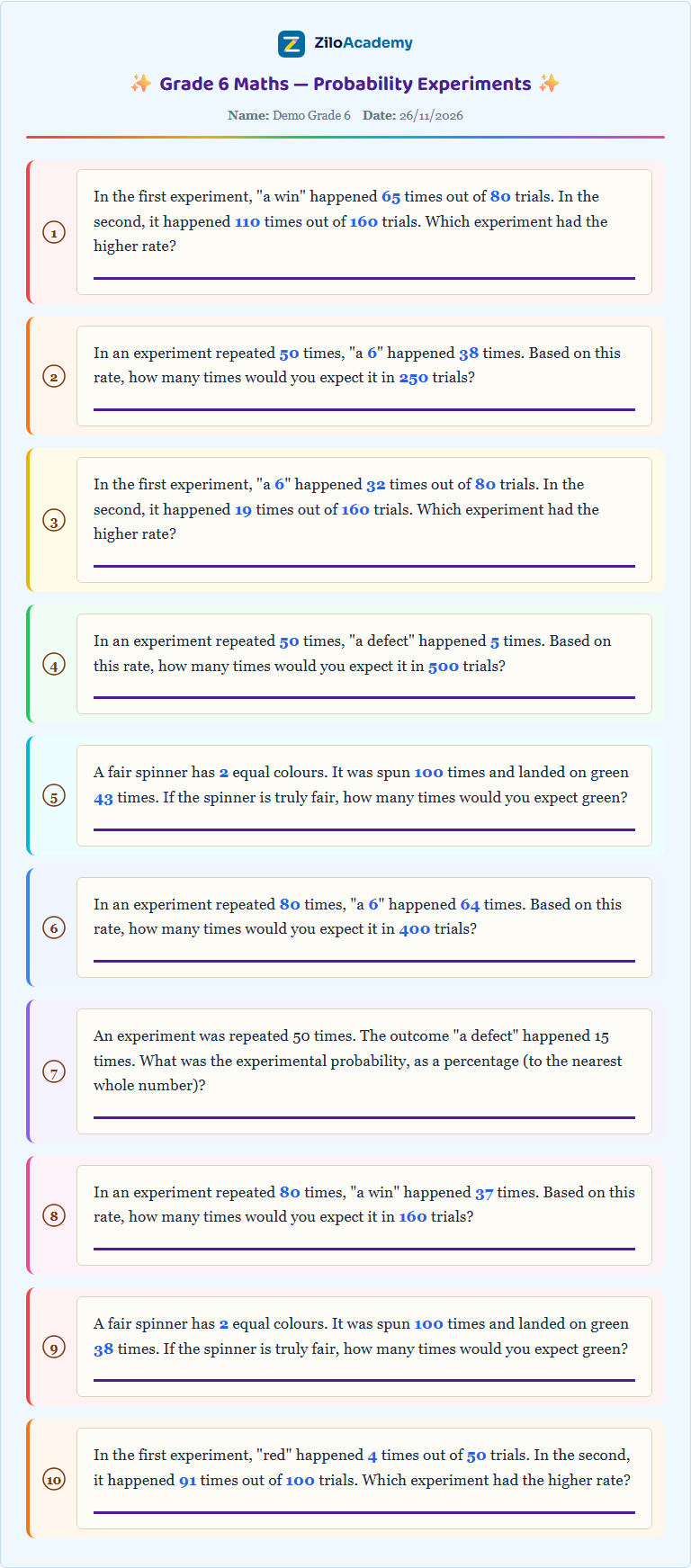
👆 This is what a real Year 6 Probability Experiments Worksheets worksheet looks like
A real sample page — click the image to open the full worksheet and print it, with a fresh set of questions and an instant answer key.
👁️ View & Print This Worksheet →What Will Your Child Learn?
Year 6 probability experiment worksheets extend earlier single-event trials into running and recording combined-event experiments — like rolling two dice together — and comparing the real results to the theoretical probability calculated by listing outcomes. Worksheets build genuine comparison between what was predicted and what actually happened across many trials.
Why Probability Experiments Matters
Running a combined-event experiment tests whether the outcome-listing skill from the related probability topic actually predicts real results, giving students a genuine, hands-on check on their own theoretical calculation.
This topic also builds toward understanding why some combined outcomes (like rolling a 7 with two dice) are more likely than others (like rolling a 2) — a pattern that only becomes visible by running enough real trials.
How to Print the Worksheets
- Select the worksheet you want and open its printable view.
- Press Ctrl+P (Windows) or Cmd+P (Mac), or use your browser's Print option.
- In the print preview, choose A4 paper size.
- Set the layout to Portrait (most worksheets) or Landscape if the sheet is wide.
- Check the print preview to make sure nothing is cut off — adjust "Scale" or "Fit to page" if it is.
- Turn on "Black and white" or "Grayscale" in printer settings to save colour ink.
- Click Print — or choose "Save as PDF" as the destination to keep a digital copy instead.
Works the same way whether you're printing from Chrome, Edge or Safari, on a desktop, laptop or tablet. Full details, including printing from a phone and fixing content that's cut off, are in our complete guide to printing worksheets at home.
Tips for Parents
- Run a real combined-event experiment together, like rolling two dice many times and recording the totals
- Compare the real results to the theoretical probability calculated by listing every combined outcome
- Discuss why some totals come up more often than others when rolling two dice
- Keep a careful tally during the experiment to build that recording skill alongside the probability concept
Frequently Asked Questions
📚 Helpful Guides for Parents
Get more out of every worksheet with practical tips from the Zilo Academy blog — study routines, NAPLAN advice and ways to support your child’s learning at home.