Year 7 Narrative Techniques Worksheets (Printable PDFs)
Printable Year 7 narrative techniques worksheets from ZiloAcademy, covering flashback, foreshadowing and other storytelling devices. Aligned with the Australian Curriculum (Version 9.0).
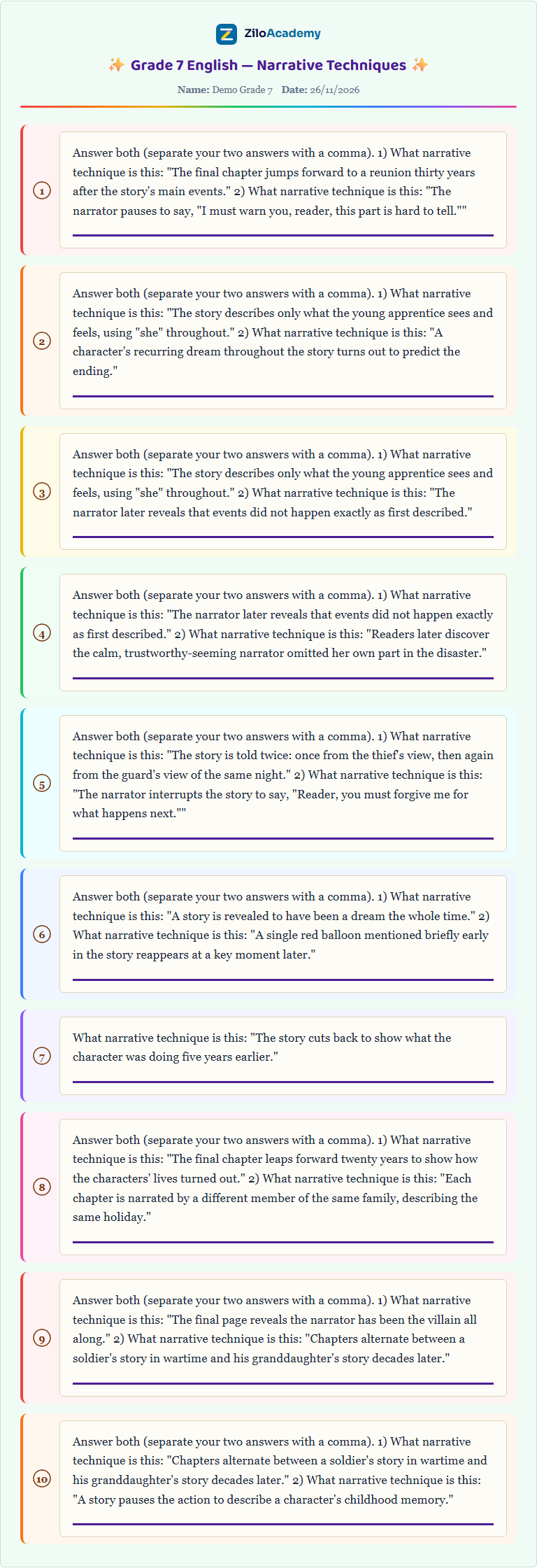
👆 This is what a real Year 7 Narrative Techniques Worksheets worksheet looks like
A real sample page — click the image to open the full worksheet and print it, with a fresh set of questions and an instant answer key.
👁️ View & Print This Worksheet →What Will Your Child Learn?
Year 7 narrative techniques worksheets build identifying devices like flashback, foreshadowing, flash-forward and dramatic irony in published stories, and understanding the specific effect each one creates. Worksheets include using these techniques deliberately in the student's own narrative writing, not just recognising them in others'.
Why Narrative Techniques Matters
These techniques are what separate narratives told in a straightforward, linear way from genuinely crafted storytelling — recognising foreshadowing or a deliberately placed flashback shows a student is reading like a writer, noticing *how* a story is built, not just what happens in it.
Using these techniques deliberately in a student's own writing, once understood rather than imitated blindly, is a real step up in narrative sophistication, giving their stories a more crafted, less purely linear feel.
How to Print the Worksheets
- Select the worksheet you want and open its printable view.
- Press Ctrl+P (Windows) or Cmd+P (Mac), or use your browser's Print option.
- In the print preview, choose A4 paper size.
- Set the layout to Portrait (most worksheets) or Landscape if the sheet is wide.
- Check the print preview to make sure nothing is cut off — adjust "Scale" or "Fit to page" if it is.
- Turn on "Black and white" or "Grayscale" in printer settings to save colour ink.
- Click Print — or choose "Save as PDF" as the destination to keep a digital copy instead.
Works the same way whether you're printing from Chrome, Edge or Safari, on a desktop, laptop or tablet. Full details, including printing from a phone and fixing content that's cut off, are in our complete guide to printing worksheets at home.
Tips for Parents
- Identify flashback, foreshadowing or dramatic irony in your child's current reading, naming each device precisely
- Discuss the specific effect each technique creates for a reader
- Encourage experimenting with one narrative technique deliberately in your child's own writing
- Point out subtle foreshadowing on a second reading — authors often plant it early, easy to miss the first time
Frequently Asked Questions
📚 Helpful Guides for Parents
Get more out of every worksheet with practical tips from the Zilo Academy blog — study routines, NAPLAN advice and ways to support your child’s learning at home.