Year 8 Experimental Probability Worksheets (Printable PDFs)
Printable Year 8 experimental probability worksheets from ZiloAcademy, covering comparing experimental results to theoretical predictions. Aligned with the Australian Curriculum (Version 9.0).
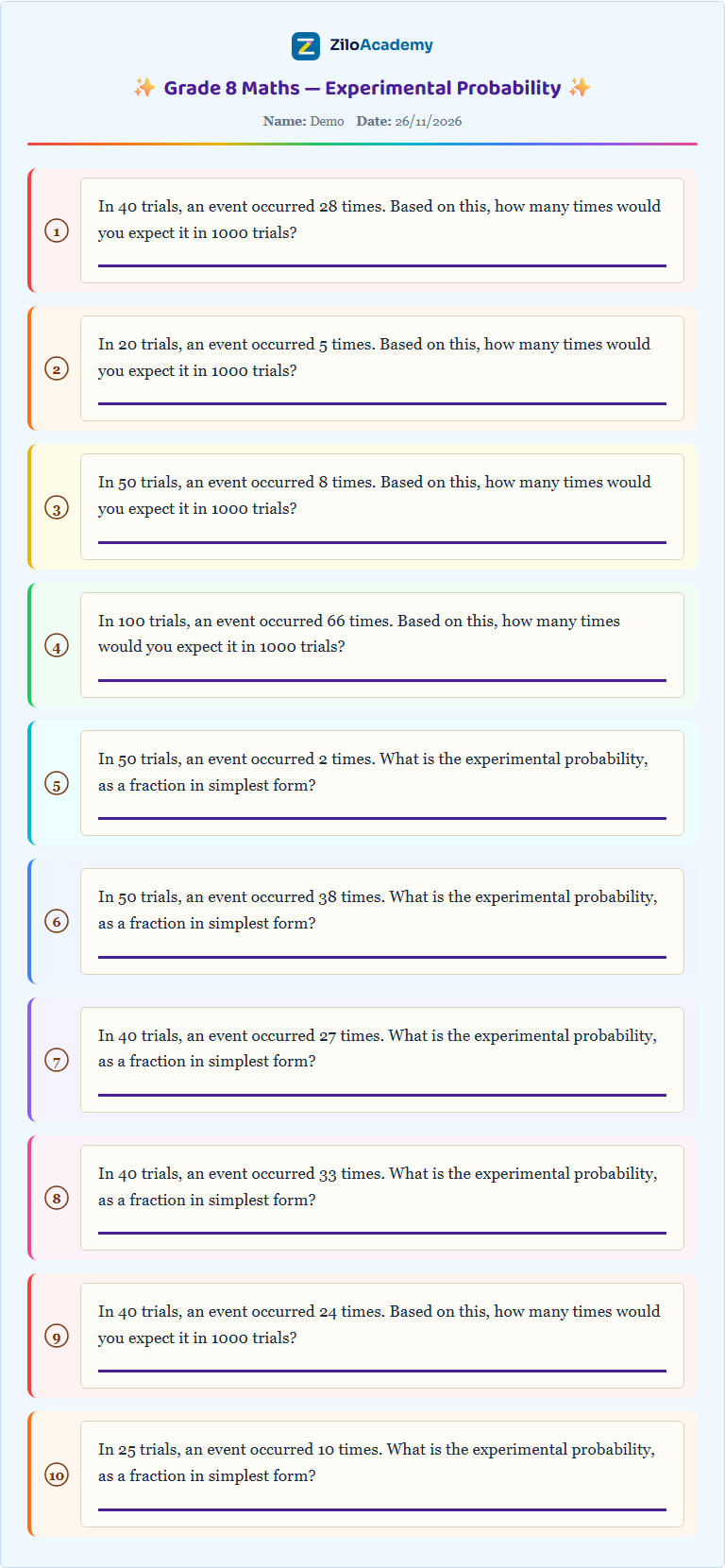
👆 This is what a real Year 8 Experimental Probability Worksheets worksheet looks like
A real sample page — click the image to open the full worksheet and print it, with a fresh set of questions and an instant answer key.
👁️ View & Print This Worksheet →What Will Your Child Learn?
Year 8 experimental probability worksheets build conducting or analysing a real or simulated trial (relative frequency from repeated events) and comparing the experimental results against the theoretical probability calculated separately. Worksheets explore why the two don't always match exactly, and what happens as the number of trials increases.
Why Experimental Probability Matters
Comparing experimental results to theoretical predictions is where probability moves from pure calculation into genuine scientific-style reasoning — noticing and explaining a discrepancy between what should happen and what actually happened is real statistical thinking.
Understanding that experimental results converge toward theoretical probability as the number of trials increases (and why a small number of trials can look quite different from the theoretical prediction) is a genuinely important statistical concept, worth building intuition for through real or simulated repeated trials.
How to Print the Worksheets
- Select the worksheet you want and open its printable view.
- Press Ctrl+P (Windows) or Cmd+P (Mac), or use your browser's Print option.
- In the print preview, choose A4 paper size.
- Set the layout to Portrait (most worksheets) or Landscape if the sheet is wide.
- Check the print preview to make sure nothing is cut off — adjust "Scale" or "Fit to page" if it is.
- Turn on "Black and white" or "Grayscale" in printer settings to save colour ink.
- Click Print — or choose "Save as PDF" as the destination to keep a digital copy instead.
Works the same way whether you're printing from Chrome, Edge or Safari, on a desktop, laptop or tablet. Full details, including printing from a phone and fixing content that's cut off, are in our complete guide to printing worksheets at home.
Tips for Parents
- Run a genuine simple experiment (coin flips, dice rolls) and compare the actual results to the theoretical prediction
- Discuss why a small number of trials can look quite different from the theoretical probability
- Increase the number of trials and observe results converging closer to the theoretical prediction
- Avoid assuming a difference between experimental and theoretical results is automatically an error — it's often just natural variation
Frequently Asked Questions
📚 Helpful Guides for Parents
Get more out of every worksheet with practical tips from the Zilo Academy blog — study routines, NAPLAN advice and ways to support your child’s learning at home.