Year 8 Imagery Worksheets (Printable PDFs)
Printable Year 8 imagery worksheets from ZiloAcademy, covering identifying and analysing sensory language in texts. Aligned with the Australian Curriculum (Version 9.0).
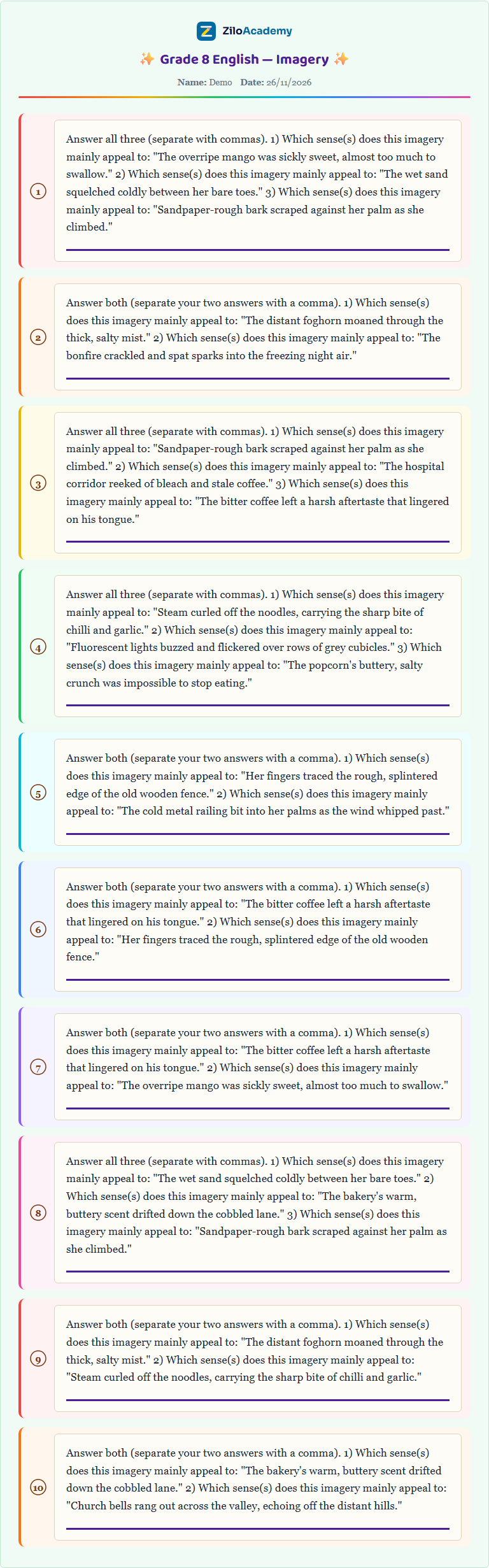
👆 This is what a real Year 8 Imagery Worksheets worksheet looks like
A real sample page — click the image to open the full worksheet and print it, with a fresh set of questions and an instant answer key.
👁️ View & Print This Worksheet →What Will Your Child Learn?
Year 8 imagery worksheets build identifying sensory language across sight, sound, touch, smell and taste within a text, and analysing exactly what effect that imagery creates for the reader. Worksheets include comparing a passage with and without its imagery, discussing what's lost without it.
Why Imagery Matters
Analysing imagery's specific effect, not just identifying that it exists, moves this skill from simple spotting into genuine literary analysis of how an author shapes a reader's experience.
Comparing a passage with and without its imagery makes the effect of sensory language concrete and visible, demonstrating exactly what's lost when vivid, specific detail is stripped away.
How to Print the Worksheets
- Select the worksheet you want and open its printable view.
- Press Ctrl+P (Windows) or Cmd+P (Mac), or use your browser's Print option.
- In the print preview, choose A4 paper size.
- Set the layout to Portrait (most worksheets) or Landscape if the sheet is wide.
- Check the print preview to make sure nothing is cut off — adjust "Scale" or "Fit to page" if it is.
- Turn on "Black and white" or "Grayscale" in printer settings to save colour ink.
- Click Print — or choose "Save as PDF" as the destination to keep a digital copy instead.
Works the same way whether you're printing from Chrome, Edge or Safari, on a desktop, laptop or tablet. Full details, including printing from a phone and fixing content that's cut off, are in our complete guide to printing worksheets at home.
Tips for Parents
- Identify sensory language across all five senses, not just visual imagery, when reading together
- Discuss the specific effect a piece of imagery creates — what feeling or atmosphere it builds
- Compare a passage with its imagery removed, discussing what's genuinely lost without it
- Encourage using varied sensory imagery, not just visual description, in your child's own writing
Frequently Asked Questions
📚 Helpful Guides for Parents
Get more out of every worksheet with practical tips from the Zilo Academy blog — study routines, NAPLAN advice and ways to support your child’s learning at home.