Year 8 Theoretical Probability Worksheets (Printable PDFs)
Printable Year 8 theoretical probability worksheets from ZiloAcademy, covering calculating probability of combined and complementary events. Aligned with the Australian Curriculum (Version 9.0).
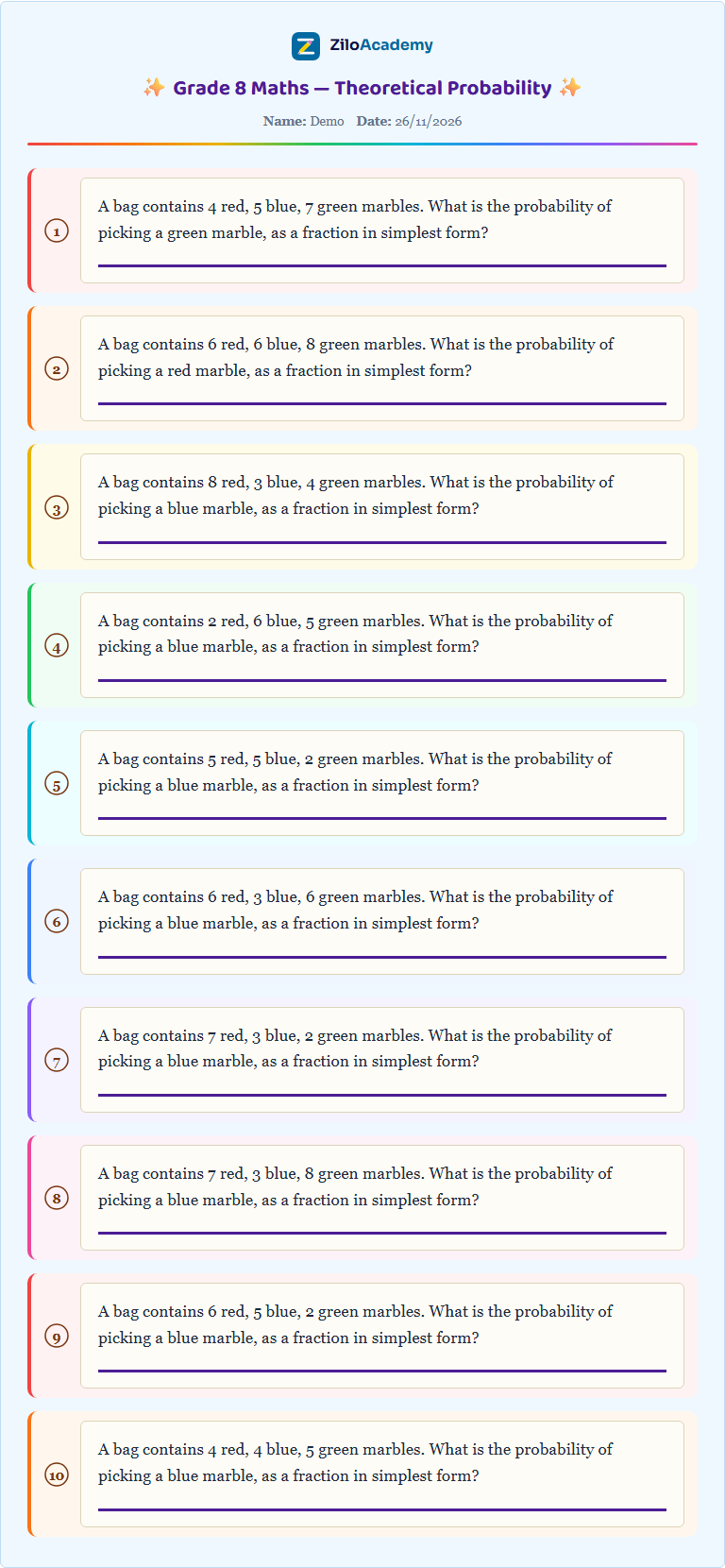
👆 This is what a real Year 8 Theoretical Probability Worksheets worksheet looks like
A real sample page — click the image to open the full worksheet and print it, with a fresh set of questions and an instant answer key.
👁️ View & Print This Worksheet →What Will Your Child Learn?
Year 8 theoretical probability worksheets extend Year 7's single-event probability into combined events (using sample spaces built from tables or tree diagrams) and complementary events (the probability something does *not* happen). Worksheets build calculating probability directly from a correctly constructed sample space.
Why Theoretical Probability Matters
Combined event probability specifically tests whether the sample space work was done correctly first — an error in listing outcomes carries directly through to an incorrect probability, making this topic a genuine test of both skills together, not probability calculation in isolation.
Complementary events offer a genuinely useful shortcut worth understanding properly — calculating "the probability of NOT rolling a six" via 1 minus "the probability of rolling a six" is often far faster than calculating it directly, once a student trusts why the shortcut is valid.
How to Print the Worksheets
- Select the worksheet you want and open its printable view.
- Press Ctrl+P (Windows) or Cmd+P (Mac), or use your browser's Print option.
- In the print preview, choose A4 paper size.
- Set the layout to Portrait (most worksheets) or Landscape if the sheet is wide.
- Check the print preview to make sure nothing is cut off — adjust "Scale" or "Fit to page" if it is.
- Turn on "Black and white" or "Grayscale" in printer settings to save colour ink.
- Click Print — or choose "Save as PDF" as the destination to keep a digital copy instead.
Works the same way whether you're printing from Chrome, Edge or Safari, on a desktop, laptop or tablet. Full details, including printing from a phone and fixing content that's cut off, are in our complete guide to printing worksheets at home.
Tips for Parents
- Build the sample space correctly and completely before calculating any probability from it
- Practise using the complementary event shortcut (1 minus the opposite event's probability) where it genuinely simplifies the problem
- Discuss *why* the complementary event shortcut works, not just that it does
- Use combined events (two dice, a coin and card together) for genuinely challenging, realistic practice
Frequently Asked Questions
📚 Helpful Guides for Parents
Get more out of every worksheet with practical tips from the Zilo Academy blog — study routines, NAPLAN advice and ways to support your child’s learning at home.