Year 9 Literary Techniques Worksheets (Printable PDFs)
Printable Year 9 literary techniques worksheets from ZiloAcademy, covering identifying and analysing symbolism, irony and characterisation. Aligned with the Australian Curriculum (Version 9.0).
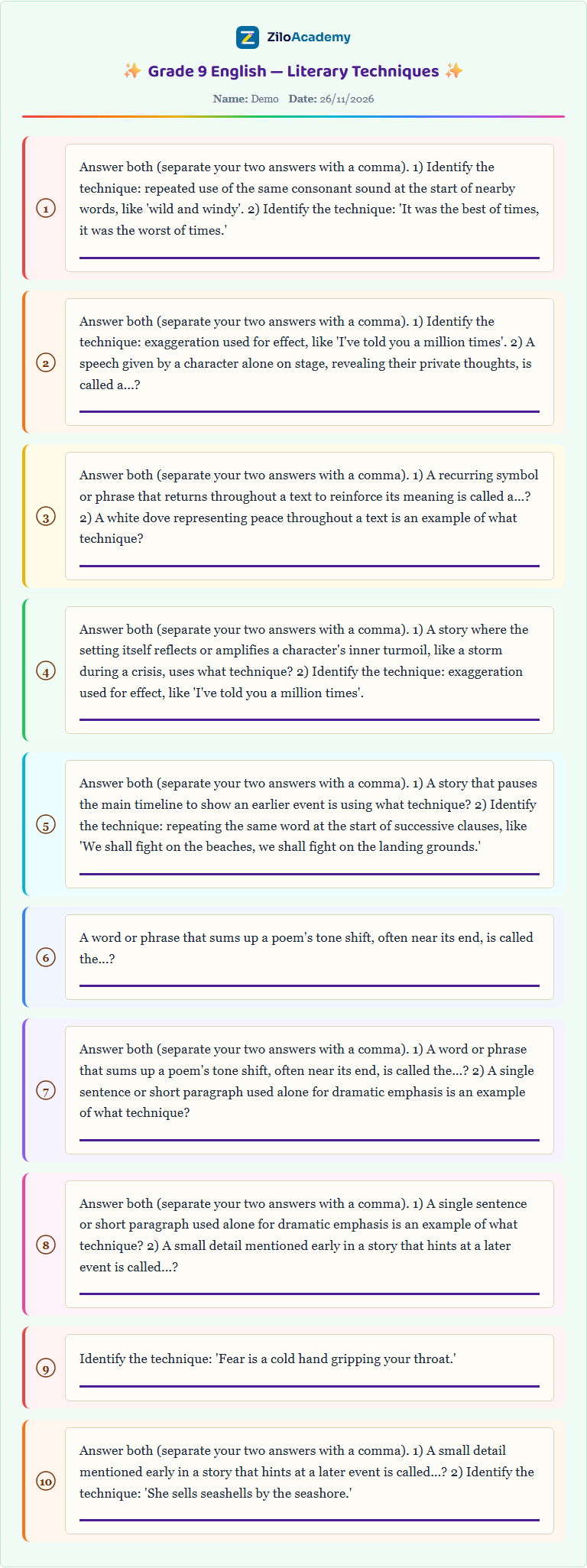
👆 This is what a real Year 9 Literary Techniques Worksheets worksheet looks like
A real sample page — click the image to open the full worksheet and print it, with a fresh set of questions and an instant answer key.
👁️ View & Print This Worksheet →What Will Your Child Learn?
Year 9 literary technique worksheets move into more sophisticated textual analysis tools: symbolism (an object or image representing a larger idea), irony (a gap between expectation and reality), and characterisation (how a writer builds and reveals a character). Worksheets use technique-identification and effect-explanation tasks, pairing spotting a technique with explaining its actual effect.
Why Literary Techniques Matters
These three techniques — symbolism, irony and characterisation — appear constantly in the more complex texts studied through senior English, so building genuine fluency recognising and discussing them now directly prepares a student for that more demanding literary analysis later.
The "effect-explanation" half of this topic matters as much as identification: naming a technique is a relatively surface-level skill, but explaining specifically how it shapes a reader's understanding or response is the deeper analytical move that actually distinguishes strong literary analysis.
How to Print the Worksheets
- Select the worksheet you want and open its printable view.
- Press Ctrl+P (Windows) or Cmd+P (Mac), or use your browser's Print option.
- In the print preview, choose A4 paper size.
- Set the layout to Portrait (most worksheets) or Landscape if the sheet is wide.
- Check the print preview to make sure nothing is cut off — adjust "Scale" or "Fit to page" if it is.
- Turn on "Black and white" or "Grayscale" in printer settings to save colour ink.
- Click Print — or choose "Save as PDF" as the destination to keep a digital copy instead.
Works the same way whether you're printing from Chrome, Edge or Safari, on a desktop, laptop or tablet. Full details, including printing from a phone and fixing content that's cut off, are in our complete guide to printing worksheets at home.
Tips for Parents
- When discussing a book or film together, ask not just "what technique is this?" but "what effect does it have on you as the reader or viewer?"
- Discuss a recurring symbol in a favourite story and what larger idea it seems to represent
- Point out irony when it appears in everyday conversation or media, building familiarity with the concept beyond formal texts
- Discuss how a writer reveals character — through actions, dialogue, other characters' reactions — rather than only direct description
Frequently Asked Questions
📚 Helpful Guides for Parents
Get more out of every worksheet with practical tips from the Zilo Academy blog — study routines, NAPLAN advice and ways to support your child’s learning at home.